

Whoa! Okay, so check this out—Solana moves fast. Transactions confirm in a blink and NFTs change hands before you finish a coffee. My instinct said the tooling would be messy, but honestly, Solscan feels like the one tool that grew up with the chain. I’m biased, but it’s become my go-to for quick forensics and long-form investigation when something feels off.
If you’re new here: Solana transactions are built around signatures, accounts, and program instructions. Medium-level users often get tripped up by token transfers that aren’t obvious at first glance. Initially I thought a simple token-transfer line was enough to understand a payment, but then realized you have to follow inner instructions, wrapped SOL, and program-owned accounts to really know what’s happening. Actually, wait—let me rephrase that: you need to look beyond the top-line transfer, because Solana’s parallelized design hides a lot of the action inside inner instructions.
Here’s what bugs me about explorers in general. They often show a lot of data, but not the right context. Solscan, though, strikes a decent balance between raw data and practical UX. It surfaces the transaction signature, the exact instruction set, token amounts (with decimals applied), and associated accounts. If you want timestamps, block height, fee paid, and the cluster (mainnet-beta or testnet), it’s all there without hunting.
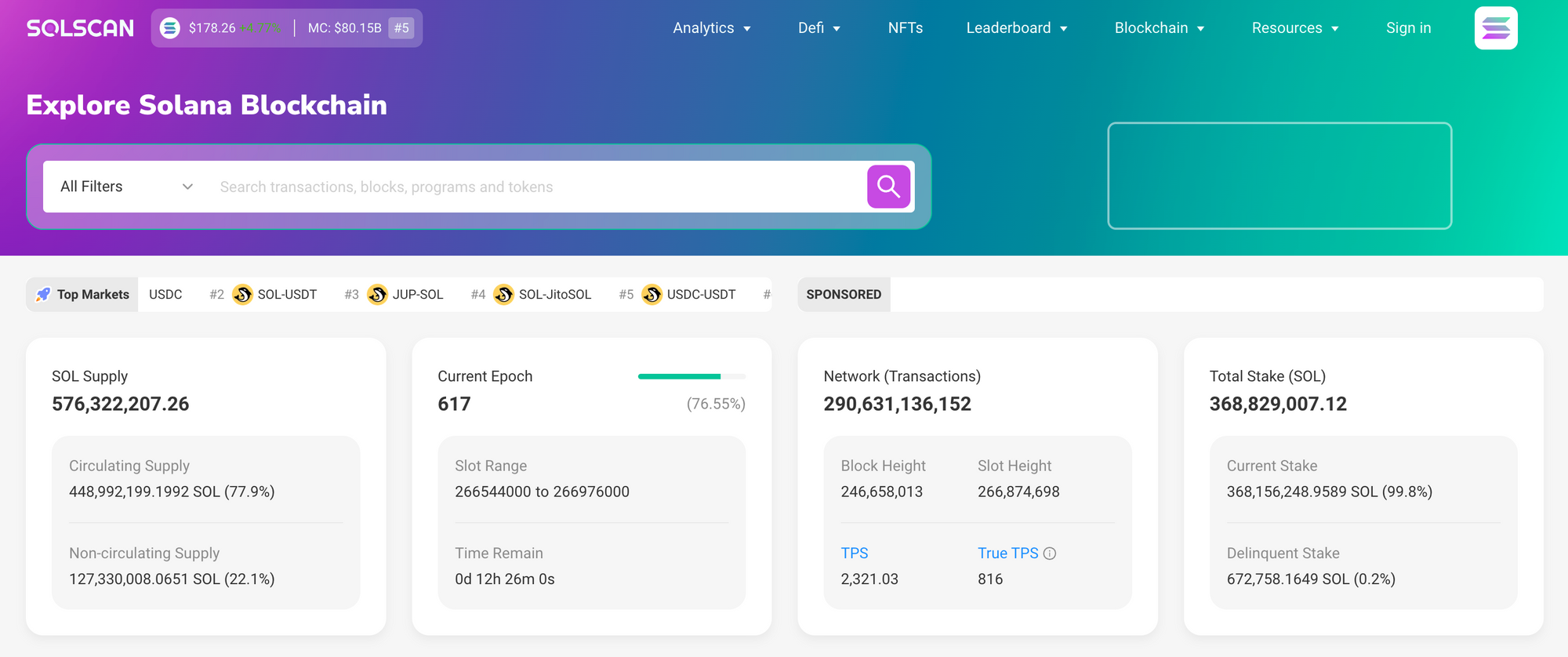
How to read SOL transactions faster
Start with the signature. Paste it into the search bar and scan the overview first. Wow! Look at the “Status” and “Slot” fields. Then drop into “Instructions” to see the program called (system, token program, or Metaplex, for example) and the exact instruction type. Short but crucial: check fee payer and affected accounts. On one hand the overview looks simple; though actually the instruction list can show swaps and internal transfers that change balances in ways you wouldn’t expect.
Practical tip: use the token-transfer view to get human-readable amounts. Many tokens use decimals, so raw lamport numbers will mislead you if you don’t apply the token decimals. Also, memos and CPI (cross-program invocation) traces are your friend when tracing NFT marketplace sales or batched operations. Something felt off about a sale? Check the program logs—sometimes marketplace royalties are stripped or redirected in ways the front-end hides.
NFT tracking: ownership, history, and provenance
NFTs on Solana are mostly mint-address based. Track a mint address to see the whole lifecycle: minting, first sale, and transfers. Hmm… ownership can flip fast, but Solscan lists token balances for each holder and shows transfers in chronological order. If you need to verify metadata, look for the on-chain metadata account (Metaplex standards) and check the URI—then confirm via the mint’s metadata JSON. I’m not 100% sure every RPC endpoint returned data the same way, so sometimes you’ll need alternate endpoints to be sure.
Pro tip: watch for “wrapped” or “tokenized” variants and for program-derived addresses (PDAs) holding authority. Those can make an NFT look like it’s still with the creator when, actually, a PDA controls the sale. Also, when investigating royalties or airdrops tied to a collection, cross-reference mint addresses and creator addresses—Solscan surfaces creator arrays which is very very useful.
Solscan features worth using
Search by wallet address, transaction signature, block slot, or token mint. Use the NFT tracker to follow collections and filter transfers by marketplaces like Magic Eden or OpenBook trades. The token page shows holders, transfers, and a supply chart. There’s an API if you want to automate alerts or pull bulk history. Onboarding new users? The Explorer UI is clean enough that non-technical folks can check balances and transfer history without getting lost.
One caveat: always verify you’re on the official site before entering sensitive data. Phishing clones exist. To make that easy, check the official Solscan link I trust and use: https://sites.google.com/cryptowalletextensionus.com/solscan-explorer-official-site/ —only click one reliable link, and bookmark it. (oh, and by the way… bookmarks save a lot of headaches.)
Advanced tracing techniques
If you want to trace funds across multiple transactions, export CSV from a token page or use the API to pull transfer sequences. Chain funds by matching source and destination accounts across signatures. Use logs and inner instruction parsing to follow wrapped SOL unwrapping or program accounts that temporarily hold funds. On one hand this takes time—but on the other hand you can reconstruct complex flows pretty reliably if you’re patient.
For NFT provenance, dig into the mint transaction and any “create metadata” or “update metadata” instructions. The metadata URI generally points to a JSON that contains the image and creator fields. If something smells off—like metadata that points to an IPFS hash you can’t find—stop and investigate. My experience says IPFS pinning or broken URIs cause a lot of confusion during secondary sales.
APIs, rate limits, and practical scripts
Solscan’s API can be used for alerts, dashboards, or building a minimal NFT tracker. If you expect heavy volume, handle pagination and rate limits. Cache results locally; don’t hammer endpoints during spikes. Initially I thought polling every 10 seconds was fine, but then realized exponential backoff and webhooks are more polite and robust. Also, keep key rotation and error handling in your scripts—errors will happen, and sometimes RPCs lag behind finality.
Want to build a watchlist? Monitor mint addresses for transfers, and send notifications when owner addresses change or when floor prices move. I’m biased toward serverless Lambdas for cost-effective monitoring, but your mileage may vary depending on traffic. For production, use multiple RPC providers and consider fallbacks to avoid single-point failures.
FAQ
How do I confirm my SOL transaction succeeded?
Search the transaction signature on Solscan and check Status = Success and Confirmations. Then verify the block slot and affected account balances. If logs show “program failed”, the transaction may have consumed fees even if it failed—so double-check balances and refund flows.
Can I see who bought an NFT and when?
Yes. Look up the NFT mint address, then view transfer history and marketplace-related instructions. Timestamps and the buyer’s wallet are displayed. For marketplace sales, inspect program logs to see price, fees, and any royalties applied.
Is Solscan safe to use?
Solscan itself is an explorer and does not require private keys. However, always verify the official URL before interacting with third-party tools and never paste private keys into a website. Use wallets and signatures via trusted browser extensions or hardware wallets for transactions.